Hello, friends. Like you, I’m quite happy to put 2020 behind me. I won’t lie. This year has been, shall we say…challenging…in a lot of ways. I have made it through the year better than I started it, and for that I am grateful. I’ve been pushed to be better, I’ve stretched myself in my writing, gotten promoted at my side gig, and am ending the year finally feeling truly settled in Charlotte after living here for the past decade. I’m glad for all that, but the road to get there was a painful one. However, I needed that pain to grow, so while I’m glad for the lesson, I do not wish for the pain again.
Want to know what I’ve been up to in the past year and half? Here are a few things.
Fangirling at Fangirlish
I’ve been writing a new column at Fangirlish, #WayBackWednesday. I review one retro film a week and offer a spoiler-free review of the film. That’s been a good challenge and I’ve also gotten to cross several of those retro films I’ve been meaning to watch for a while off my list. Click this link to check out the films I’ve covered since starting the column earlier this year.
This year, I also got to cover Star Trek: Discovery on Fangirlish. I cannot tell you what a joy taking this deep dive into Discovery has been for me. This season has had such a thread of hope and I have needed that in my entertainment this year. You can read my reviews of each episode right here, but do understand that they are spoiler-heavy! Are any of my readers here keeping up with Discovery? I am continually shocked by how much I adore it. I am especially loving the development of my gal Tilly (Mary Wiseman) this season. Leave me a comment and let’s talk Trek. We’ve got ONE EPISODE left this season and I can’t wait to see what happens next.
The other show I covered this year (and last year too!) at Fangirlish is The Mandalorian. The Mandalorian ended on such a high note this year and it gave me something I didn’t know I wanted, heck, needed. I detail that thing I needed in my review of “The Rescue“, so check it out there.
Kicking it Old School at The Pop Culture Retrorama
One thing that’s given me great joy this year is contributing to the blog and podcast of The Pop Culture Retrorama. I’ve started a series on the 1995 Marvel Gargoyles comics series, and that’s been fun to do. I’ve also joined The Pop Culture Retrorama Podcast as a regular contributor in its new magazine-style format. You can listen to the podcast here, or subscribe through your favorite podcatcher. We just put out a holiday special, and we’ve still got a few more days before Epiphany, so you can enjoy that before the Christmas season is officially at an end. Enjoy!
Living in the Real World
As I mentioned, this year has presented a real set of challenges for me. I spent the end of 2019 and up until February this year in a state of depression. Truthfully, I didn’t know that I was even depressed until a dear friend pointed it out. Recognizing that and also finally feeling settled in Charlotte with real friends helped to pull me out of it.
Quarantine was hard for me. We were on a shelter-in-place order for the better part of two months. As an extrovert, this was especially difficult for me, especially since I felt I finally had made best friends in Charlotte. I used to think I tipped towards the ambivert side of the scale. Shelter-in-place determined that was a LIE. I was losing what fragile hold I had on that escape from depression. I know there’s such a thing for Zoom fatigue, but I never got that. Zoom, video chat, co-working sessions with friends in other places over Google hangouts, were a lifeline for me. I was also able work on hobbies that had went to the wayside. I bought a cajon, a Peruvian box drum that I’d wanted for the better part of 15 years. I picked up guitar again. I started to sing. These were depression fighters, and I desperately needed them.
I have worked through more emotional issues this year than I thought possible. I asked for help when I needed it. I read books that challenged and affirmed me. Friends pushed me to be better, even when it hurt, and I needed it. I still have work to do, but I feel a lot better than I did when I started the year and I’m grateful.
God has been kind to me. He continues to be kind to me. Even with the hard things, I have been blessed and I am grateful.
2021 is just a few hours away for me. Wherever you find yourself, know that I wish you and yours all the best for the new year. May we end the next year better than where we found it.
I apologize for the delay of The Movie Review That Was Promised. Game of Thrones is on right now, which means I’ve been writing a lot about the current season on Fangirlish.com. April was a busy month and May is looking to be no different. Here’s where you can find my latest work around the web.
I have been writing extensively about Game of Thrones on Fangirlish during the new season, both my own articles and contributing to several roundtable discussions. Here are links to everything so far. Be advised that these links will contain SPOILERS for season 8 of Game of Thrones. Consider this your SPOILER WARNING!
Not only have I been writing about Game of Thrones for Fangirlish, I’ve also been contributing to other roundtables and writing my own pieces, focusing on Avengers: Endgame, Stranger Things, and The Hunger Games. Be cautioned that the Avengers: Endgame piece is SPOILER HEAVY, so avoid if you’ve not yet seen the film.
I’ve now gotten to participate in Mythgard Movie Club three times! In case you’ve missed our discussions, here are the film discussions where you can find me.
I think that’s it for now! I’ll have a couple more Game of Thrones pieces to share with you on my next link roundup, as well as a full film review of Tolkien, which I highly recommend. Thanks for sticking with me!
The past couple of weeks have afforded me the opportunity to geek out all around the web. Here are a few links that may be of interest to my readers here.
Stranger Things Season 3 Trailer Breakdown! – I had the honor of doing a quick rundown of the latest Stranger Things trailer for The Retroist. Truthfully, this post could have been significantly longer. It’s only a handful of things I spotted. Tell me what you saw that I didn’t cover after you read Stranger Things This Way Comes.
Funnie. Doug Funnie. Speaking of The Retroist, I just started a brand new series on retroist.com where I’ll be taking a deep dive into every single episode of the original Doug series on Nickelodeon. Doug holds the distinction of being one of three animated shows that ultimately influenced me as an adult, so I’m quite excited to share my love for it with a wider audience. My first post went live on Friday, so if you’ve not seen it yet, take a good look at episode one. Doug – “Doug Bags a Neematoad” – S01E01 on The Retroist.
Mythgard Movie Club: Captive State! – In just a couple weeks I’ll be participating in the next Mythgard Movie Club discussion where we will be talking about the new film, Captive State. I’ve seen this film three times and would happily watch it a fourth if I can. Captive State is a solid science fiction film that is knowledgeable of the genre in which it sits. This will be my third time on the Mythgard Movie Club, and I’m happy to be part of this discussion. You can find more information on the Captive State Movie Club here. If you use facebook, you can also RSVP to the event so you can get reminders. Mythgard Movie Club: Captive State is on April 18, 2019 at 8:30 PM EDT. Would love to see you there. If you’ve not gotten to participate in the Mythgard Movie Club before and you’d like a taste of what to expect, check out my previous two appearances on the Mythgard Movie Club–Alien and Night of the Living Dead. Also, if you would like to continue furthering my adventures at the theater, please sign up for AMC Theaters’ Stubs Premiere Program through my affiliate link.
Fangirlish.com has a new writer! – Your girl is now a staff writer for Fangirlish.com. The first thing I’ve gotten to do with them is participate in a Game of Thrones Roundtable season 8 speculation. Take a look at my speculations, along with those of 4 other writers and editors at Fangirlish.com. ‘Game of Thrones’ Season 8 Roundtable: Who Lives, Who Dies, Who Tells This Story?
My first solo article on Fangirlish concerns who might be the younger, more beautiful (queen) on Game of Thrones. In it I look at all the contenders to topple Cersei Lannister, Daenerys Targaryen, Sansa Stark, Brienne of Tarth, and even consider Arya Stark as a potential wild card for the title. I’m so excited to be part of the Fangirlish team! Take a look at it here! Who is the the Younger, More Beautiful (Queen) on Game of Thrones?
That’s what I’ve been up to lately. Stay tuned, as I’m going to have a lot more work around the web in the coming months. I’m quite excited for the opportunity!
This post contains affiliate links. Please see my disclosure policy for more details.
I promised you last June to highlight my MoviePass adventures for March 2018. In the time since I wrote that post, I canceled MoviePass because frankly, their customer service absolutely tanks and I can no longer recommend their service in good conscience. However, I was a MoviePass customer through October 2018 and it allowed me to take a risk on movies I might not have normally seen. It was a horizon-broadening experience. I saw films that blew my mind and some that I didn’t care for, but I more than got my money’s worth from their service while it lasted. Unfortunately, I failed to take a screenshot of my film history with MoviePass before canceling, so I don’t have a complete record of all the films I saw with them. However, I did manage to snap a screenshot of my husband’s before he canceled his account and we saw many of the same films. In my next post, I will be giving you the highlights of my adventures with MoviePass for the remainder of 2018. In December of last year, I signed up for AMC’s A-List program and have been quite happy with the results. I will include an affiliate link at the bottom of this post if you’d like to sign up for their Stubs Premiere program, which is included in the A-List membership. This will allow you to get 100 points for every dollar you spend at AMC theaters, be it on tickets, concessions, and even alcohol. Once you get 5,000 points, you get a $5 reward that you can spend on tickets, concessions, or even renewing your Stubs Premiere account. Signing up through my link helps fund my film reviews here on the site, so give it a go! I’ll be writing about the movies I see this year with the A-List.
As I try to be a woman of my word, here are a couple of quick reviews of the two movies I promised earlier, Three Billboards Outside of Ebbing, Missouri and Ready Player One.
Three Billboards Outside of Ebbing, Missouri – I went into this film with a couple of purposes. 1). I will watch Peter Dinklage in ANYTHING because I adore him. Heck, I even watched and enjoyed the absurdity of Pixels because hey, who doesn’t want to see Tyrion Lannister with a mullet fighting retro gaming bad guys? He had a small role in this film, but his character was endearing, providing some welcome comic relief to a very serious film. 2). I wanted to see how it was possible for Frances McDormand to best Sally Hawkins for best actress at the Oscars. Sally was such a powerhouse in The Shape of Water, I was surprised that she didn’t win.
Three Billboards was an emotional roller coaster. It was a difficult film to watch, but not because it was bad. That certainly wasn’t the case. The circumstances surrounding the film’s premise are incredibly dark and disturbing. It shows a family in turmoil, dealing with the aftermath of a daughter’s brutal rape and murder. It deals with the ramifications of what happens when justice isn’t served. It asks the question, “Why must we wait for justice?” McDormand’s character, Mildred, does everything she can to draw attention to this issue. The film also deals with stereotypes, expectations, grief, and racism. Sam Rockwell as Dixon and Woody Harrelson as Chief Willoughby deliver incredible performances as well. Coupling these performances with the film’s timely theme make it an important film, but I would advise treading with caution. It’s an incredibly dark film. I watch dark and violent things all the time, but I would have to gear myself up to watch this one a second time. The grief in this film and the desire for justice weigh heavy on me. You might want to follow this one up with something a little more lighthearted, to use a term coined by a friend of mine, “a unicorn chaser,” something that will make you laugh and lighten the mood. However, don’t forget the poignant message of the film–justice must be served.
Ready Player One – Speaking of “unicorn chasers”, Ready Player One certainly fits the bill for a “unicorn chaser.” Ready Player One is a Steven Spielberg adaptation of Ernest Cline’s book of the same name. It’s also my favorite book since Harry Potter. Going in, I knew that it would be practically impossible for them to render this film directly from the book. From a purely logistical standpoint, the book borrows from a veritable smorgasbord of geek culture references and Warner Bros. only has the rights to so many of those. It is financially unrealistic for the company to make that work. What I expected to happen was what I refer to as the Stardust effect. If you’ve seen and read Neil Gaiman’s Stardust, then you know that the book and film are two completely different animals. They have the framework of the same basic story, the same characters, and the same ultimate outcome, but how you get there is completely different. I love both versions of Stardust, but I bear a slight preference for the film. Ready Player One pulls off the same trick. You have the same bones and structure of the story and the same basic ending, but how you get there is completely different. I love both.
Visually speaking, Ready Player One is gorgeous. I was so impressed with the visual rendering of the Oasis. I only got to see it in 2D, which I regret, but even so, it was incredible. I was even impressed with the changes they made to get Parzival to the keys. The cuts and the back story of how “The High Five” come together was trimmed up a bit, but the changes made sense for a film adaptation. Among the cast, I was most impressed with Mark Rylance as James Halliday. The High Five actors got the heart of the characters right, even if I was dissatisfied with some of their physical appearances on screen, which were not true to the book, namely Parzival, Art3mis, and Aech. I like Ben Mendelsohn a lot as an actor, but as Nolan Sorrento, I don’t think he is nearly as menacing in the film as in the book. In the book, he’s a Bond-level Businessman Baddie; in the film, he is almost bumbling and comical, not at all intimidating like his book counterpart.
The film takes a decidedly lighter tone than the book, even though I often describe the book to friends as “happy cyberpunk.” The lighter tone gives it a fun, science fiction feel, a perfect popcorn flick without much of the darker weight of the book. The soundtrack is great, as to be expected, filled with classic rock from the 70s and 80s, but Rush is notably absent, which was disappointing, especially as “Tom Sawyer” was used in one of the trailers and the band is peppered throughout the novel.
Overall, I enjoyed Ready Player One very much, even though I am critical of some of the things that were changed. It’s a fun flick, one that I won’t ever mind popping in the player. It’s the very definition of a fun trip to the movies. As far as adaptations go, it gets the heart of the story right and I think that’s what matters most when it comes to an adaptation.
There you have it! Next post will include my film highlights from 2018, and after that, I’ll be plowing through the films I’ve seen so far this year, along with the other things I’ve been geeking out about.
If you’d like to join AMC’s Stubs Premiere program, click my affiliate link and we’ll both receive 5,000 bonus points!
Until next time, friends!
This post contains affiliate links. Please see my disclosure policy for more details.
I’ve been struggling with how to write all of this down for right on 2 months now.
2018 was a huge year for me in terms of fandom.
I met not one, not two, but EIGHT of my online friends this past year. I met all eight through the Game of Thrones fandom, specifically fellow shippers of Jaime Lannister and Brienne of Tarth. All of these ladies that I had the pleasure to meet are some of the kindest, sweetest, and most beautiful people I know. It was so encouraging to find friendship, not only through our shared shipping interest, but also to find that we had many other common interests as well. These are people I could be friends with on many different levels. I love the internet.
The other huge fandom thing that happened to me this past year is this. I did it. I finally did it. I didn’t know if it would ever happen or if it was just a pipe dream, but I finally did it.
I got to meet my hero, Gwendoline Christie.
Gwen is best known for playing Brienne of Tarth on Game of Thrones and Captain Phasma in the new trilogy of Star Wars films, but to me, she is so much more than just an actor. Rather than give you a blow-by-blow recap of exactly what happened when I met her, I want to tell you why that meeting matters to me. 2018 was a banner year for self-discovery and self-confidence for me. Let me tell you a little story about why this meeting is so important to me.
I’m a bit of an anomaly in a lot of ways. Or at least, I’ve always felt quite different from most of the people I grew up with and around, and even among my close friends as an adult. I’ve never been good at “girl” stuff. Growing up, I would have rather spent my time playing with action figures, playing outside in the dirt, riding my bike, and reading comic books, all while wearing jeans, a t-shirt, and my Incredible Hulk baseball cap, none of which are your typical “girl” stuff. I’m loud, awkward, and the other kids growing up made it clear to me that I was not a pretty girl. Broad shoulders. Thick waist. Wide hips. Crooked teeth. Pale and lightly freckled. They made it abundantly clear that I didn’t fit. That I was a nerd, a geek, a misfit, and a loser. I heard “Ashley’s a man” so often in middle school that it still makes me angry, 20+ years later. It hurt to hear all of those things said about me. It hurt to not be accepted by many of my peers. I’ve always had friends, but still felt different from many of them. Despite my tomboyish exterior, deep down, I’ve always been a true romantic. I don’t really get into romance novels or Hallmark movies, but I SHIP so hard when it comes to fandom. I always have. Shows, books, movies, comics–I usually have a ship. When I love, I love hard. But, I’ve kept that romantic side to myself. I was maybe a little embarrassed. It didn’t match up with the rest of my tomboyish persona. But still, it was there. It’s always been there. It’s not going away any time soon.
Fast forward to the year 2011. After many starts and restarts since 2006, I’d finally gotten through the first book in the A Song of Ice and Fire series by George R. R. Martin. I’m a painfully slow reader to be the owner of two literature degrees, but I finally did it. I contribute this to my inability to sit still and my undiagnosed ADD. Spurred on by the premiere of the television show, I wanted to get through the books before watching. I picked up A Clash of Kings. Little did I know that my world was about to change. I was about to be introduced to a character that would change my life. I met Brienne of Tarth. Reading Brienne’s story made me want to weep. It was the first time I’d ever met any fictional character that I felt like told my story, film, television, books, or otherwise. For those of you who’ve read the books and know a little more of the details into Brienne’s backstory, you would have recognized that many of the things that I mentioned in my own story are identical to hers. I felt like I was reading about myself, but a foot taller and with blue eyes. It is difficult for me to convey how deep and profound that experience was for me. It made me feel that maybe I wasn’t a total weirdo. That even if it was only a fictional character, there was someone out there that might get me on that same level of identity and personal experience, but also someone who was deeply romantic. It was cathartic. It was affirming. It helped me to love myself. It made me feel so much less alone.
When I saw Gwen’s casting and performance, I was more than impressed. When I read about how much research and how committed she was to the part before even being cast (up to the point of working out to build muscle, cutting her hair, and changing how she dressed/walked/etc. BEFORE getting the part), I was floored. In numerous interviews and even during her panel at Rhode Island Comic Con where I met her, Gwen has spoken about how deeply the character of Brienne resonates with her. Though Gwen has never spoken in detail, as she is a rather private person, based on what I’ve read, I think Brienne probably resonates with Gwen for many of the same reasons Brienne resonates with me. Gwen made me feel like she would be the kind of person I could sit down with for a coffee or a beer and that she would understand me in the same ways that Brienne would.
Through a set of random circumstances and happenstance, I was able to make the trip to Providence, RI to attend Rhode Island Comic Con with my friend, Erica, one of the fellow JB shippers I mentioned above. When I’ve met celebrities in the past, I’ve sort of just choked. My usual talkative self becomes silent. But I’d thought long and hard for a while that if I ever got the chance to meet Gwen, there was one thing I really wanted to say to her. When it came time for me to meet her, I shook her hand and said this, “You are the only person on any screen that makes me feel comfortable in my own skin and I just wanted to say thank you for that.” When I did, Gwen took a moment to pause, look at me, and said, “Thank you. Thank you for saying that.” I could tell that meant something to her too. I wish I’d had the presence of mind to say more, but I was still so starstruck, I was impressed that I got that much out. We chatted a little more while she autographed my Tarth banner and she looked at me, grinning, and said, “We have the same hair!” Now, if there is one thing that I actually like, even love, about my appearance, it’s my hair. That was just the icing on the cake. She was so kind to everyone in line, making time to have an actual conversation with every person that came through. She even recognized me later in the day when I did the photo op with her. You can tell when someone is being genuine and when they are not. Gwen is the real deal. Meeting Gwen was incredibly affirming. I’d happily make the effort to do it again. They say you should never meet your heroes. I’m so glad I met mine.
Like many of my fellow nerds, I was absolutely devastated to hear of the passing of Stan Lee yesterday. I never had the pleasure of meeting Stan Lee, but a few of my friends did. By all accounts, he was incredibly kind and humble. It felt silly to me, to a degree, to weep real tears over a man I’ve never met or even knew on a personal level, but there I was, sitting at my kitchen table with my face in my hands, feeling heartbroken at the Godfather of Geekdom’s passing.
Growing up in an area that did not often look too kindly upon those of us of a more nerdy persuasion, Stan Lee became a sort of geeky grandfather figure to me. He was an adult that loved the things I loved. I’d never met an adult like that before. I was inspired by the sheer number of characters and ideas that he had. They seemed to bubble over from his mind and onto the page. His work inspired me to dive into art. I started drawing. I’ve never been great at the drawing or painting side of art, but I started to draw my own comics (Lego Man and Lego Dog), and I began to write my own stories. One time I had Lego Man and Lego Dog take on my favorite Spider-man villain, Venom. I found some of these drawings when cleaning out some old papers a few months and laughed until I cried. While silly, I love what Stan Lee’s comic stories inspired in me–a drive to create stories of my own.
While many do not care for a more didactic or moralistic approach to storytelling, the lessons I learned from Lee’s stories and characters truly shaped me as an adult. “With great power comes great responsibility” from Spider-man has made me consider the gifts and small sphere of influence that I possess, that I use them wisely and to help others. I was galvanized towards the evils of racism and prejudice through reading and watching the X-Men. Reading Marvel comics as a child filled me with an incredibly deep sense of justice and a desire to protect and help the most vulnerable among us. His comics made me brave during difficult times in my life as a child. His stories still make me brave as an adult. This is the great work of Stan Lee–his comic parables have inspired generations to become better people. I am among that number.
Stan the Man is often remembered for his battle cry of, “Excelsior!” While I’d heard the term and had a vague understanding of its meaning, it occurred to me today that I’d never bothered to look it up before. The oldest use of Excelsior is this, “late 18th century (as an exclamation): from Latin, comparative of excelsus, from ex- ‘out, beyond’ + celsus ‘lofty.’” Stan Lee has inspired me to think beyond the world around me. His stories move me towards the lofty ideals of justice and equality. For this, I am incredibly grateful. I have been fundamentally changed by the work and imagination of one man. Thank you, Stan, for being a real life superhero. For this, I raise my glass to you, and join you in a resounding shout, “Excelsior!”
Thanks for sticking with me. As mentioned in a previous post, I LOVE Halloween. This year, I’ve been fortunate enough to join in not one, but TWO Halloween themed episodes of TWO of my favorite podcasts. If you’d like some ear candy, enjoy these two Halloween specials.
The Saturday Frights Podcast is a great place to get your fix for retro horror film and television. The fifth Saturday Frights Halloween special focuses on John Carpenter’s Halloween franchise. I shared my thoughts on the original Halloween. There’s lots to enjoy about the franchise within. Check out Saturday Frights Halloween Special V.
The Retroist Podcast is my all time favorite podcast. I am quite delighted to have been included in this year’s Halloween special. Enjoy tales of yore from myself and other Retroist contributors. I talk about a favorite Halloween memory with my cousin Jenna and my late Aunt Button. The Retroist holiday specials are always a good show and this year’s Halloween special is no exception. Check out The Retroist Halloween Special 2018.
Thanks for staying with my blog. I hope you have a safe and happy Halloween! Comment with your costume plans!
June got away from me with finally GETTING MY MASTER’S DEGREE and all. I just got back from the Mythmoot conference, which doubled as my Master’s graduation ceremony. If you’d like to watch me give the welcome at graduation, along with watching the entire ceremony, you may do so at the link. There are also videos of the presentations, special speakers, and more of the Mythmoot conference on Signum University’s Twitch channel as well.
Anyway, onto what you’re really here for–my long-awaited mini-reviews of the movies I saw in the theater in February 2018. Per usual, BOLO for the SPOILER WARNING should there be any major spoilers, but overall, I try to keep my reviews spoiler-free.
The Greatest Showman – I’ll be the first to admit that I’m a bit of a novice when it comes to musicals. I always enjoy them when I watch them, but they aren’t usually at the top of my list of things to watch. That being said, several of my friends wanted to see The Greatest Showman, and me being the extrovert that I am, am hard-pressed to decline an invitation to an evening of fun with my buddies. Also, my personal head canon of Wolverine (Hugh Jackman) dancing and singing while being the ringmaster of a circus is the perfect X-Men Musical Circus AU I’ve been waiting for.
There are several things I enjoyed about The Greatest Showman. The music was phenomenal. All the songs are catchy and the choreography was quite entertaining to watch. I admit to getting chills upon first hearing, “Never Enough,” (performed by former The Voice contestant Loren Allred), and being particularly moved by “This is Me.” One of the things that increased my respect for Zendaya (who I already enjoyed as MJ in Spider-man: Homecoming) was learning that she did all of her own trapeze stunts in the film. The cinematography was stunning. I particularly enjoyed how lighting, shadow, and color were used in the film. Even in scenes that didn’t take place at the circus, these elements helped to give each scene a big top-type feel. I also enjoyed the overall theme–stay hungry, but don’t lose sight of what you already have. This was a nice contrast for me since this was the musical team behind La La Land, which had great music, but had a troublesome theme in my view.
If I have one complaint about The Greatest Showman, I’ll say that the story fell a little flat for me. Part of this is because I’m not interested in venerating historical figures who weren’t actually good people in real life. Take a look at P. T. Barnum’s actual history to learn a little more about who he really was. Or, if you’d like to take a more comical look at history, check out the Honest Trailer for The Greatest Showman.
All that being said, I know a lot of folks enjoyed The Greatest Showman, and that’s certainly your prerogative to do so. However, if I want to enjoy it again, I’ll probably just stick with the soundtrack.
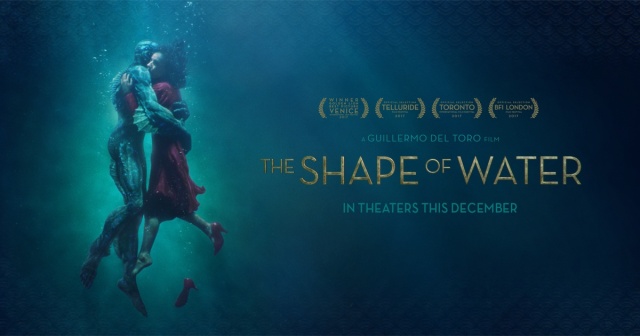
The Shape of Water – My favorite movie from 2017 is The Shape of Water. Guillermodel Toro’s response to a childhood obsession with Creature from the Black Lagoon for me is the ultimate sort of fan wish fulfillment possible. From the standpoint of someone who has obsessively engaged in analysis and creative response to film/television/literature/story my entire life, thinking about The Shape of Water from that perspective, if you’ll forgive the pun, blew me out of the water. However, the film does much more than engage in a bit of childhood wish fulfillment. I will try to keep my thoughts brief, but I could go on for hours about this film. If you’d like to dialogue with me more about the film, leave a comment and we’ll talk.
I will also give the caveat that The Shape of Water is not for everyone. Be advised that there is nudity and sexual content. However, the overarching theme and the way that particular theme is conveyed is worth discussing, especially for me as a Christian.
First of all, there are no bad actors in The Shape of Water. I had never seen Sally Hawkins in anything before and she completely melted my brain with her ability to convey emotion with no spoken dialogue. Her Oscar nomination for best actress was well deserved. Michael Shannon as the villain, Richard Strickland, was positively despicable. Octavia Spencer, Richard Jenkins, and Michael Stuhlbarg all performed their supporting roles magnificently as well. The brilliant character actor Doug Jones, one of the kindest actors I’ve had the pleasure of meeting, gives one of his finest performances, also with no spoken dialogue.
Secondly, The Shape of Water offers up a sort of magical realism type of fantasy/science fiction tale. It is conveyed majestically through the cinematography and particularly its use of color and water. Water is often displayed visually in different manners to convey different ideas or themes–boiling water, bath water, the river, rain, etc. The darker sea green hues that color many of the scenes throughout much of the film give an underwater feel. The film’s use of music, as well as the concept of film/the theater really speaks to Hawkins’ character and del Toro’s response to Creature from the Black Lagoon.
Finally, the questions raised by The Shape of Water are what ultimately make this my favorite film of 2017 and has solidified the movie in my top 10 favorite films of all time. These questions are “What does it mean to be made in the image of God?” and “How do we treat people who are in the minority, be it racially, sexual orientation, politically, or ability?”
[What follows contains the dialogue of a powerful scene. Consider this your SPOILER WARNING].
There is a scene where Michael Shannon’s character (Strickland) is sizing up Sally Hawkins and Octavia Spencer’s characters (Elisa and Zelda). The dialogue is as follows.
STRICKLAND: [to Zelda and Elisa] Let me say this up front: You clean that lab, you get out. The thing we keep in there is an affront. Do you know what an affront is, Zelda?
ZELDA: Something offensive?
STRICKLAND: That’s right. And I should know, I dragged that… filthy thing… out of the river muck in South America all the way here. And along the way we didn’t get to like each other much. Now. You may think, “That thing looks human.” Stands on two legs, right? But – we’re created in the Lord’s image. You don’t think that’s what the Lord looks like, do you?
ZELDA: I wouldn’t know, Sir. What the Lord looks like.
STRICKLAND: Well, human, Zelda. He looks like a human. Just like me… Or even you. A little more like me, I guess…
If there was ever a scene that made me utterly despise a character more in a film, I can’t think of one. As a Christian, the fact that a supposed “christian” or “God-fearing” person would ever think or utter those things is beyond deplorable and angering to me. If a viewer is skeptical of Strickland’s character at that point, there is no doubt afterwards that he is evil and irredeemable. The deep offense of this line of dialogue though is effective in highlighting the film’s main questions I mentioned earlier. The film ultimately answers those questions with its finale–all those created in the image of God should be treated with dignity and respect. What is even more fascinating to me about this film is that del Toro would describe himself as somewhere between an atheist and an agnostic, yet the more of his films I watch, the more Christian themes I find (see most notably Pan’s Labyrinth–another fairy tale for adults).
[/SPOILER WARNING]
The Shape of Water really made me consider how I treat and view those different from me. Do I see them has someone created in the image of God, or do I think of them as different or “other” from me and therefore somehow less? It is a question worth asking and something to keep at the forefront of the mind.
Jumanji: Welcome to the Jungle – I have long been fascinated by reboots, sequels, and adaptations. I initially thought Welcome to the Jungle was another needless reboot, but then after reading a little more about it, learned it was actually a sequel. I was still a little confused about why one of my favorite childhood films, Jumanji, needed a sequel, but I really liked the cast (I have a love for The Rock that I can neither explain or deny), so I figured, why not? Also, from all accounts, it was supposed to be pretty funny and I’m never one to turn down a good laugh.
The film did not disappoint on the laugh front. One of the things that I really liked about it was the way the film changed the Jumanji board game into a retro game console that was a hybrid of an Atari 2600, a Sega Genesis, and a NES. The change fit perfectly for the time period. What I also liked was that each of the video game characters fit a mid 90s beat’em up adventure game stereotype. There’s a bold adventurer, a comical sidekick, a brilliant but clumsy scientist, and the tough and beautiful female adventurer dressed like Lara Croft. The film did a great job highlighting the problems with each of these stereotypes. My one take away from the film was that I left the theater feeling like I had just watched a play-through of a mid 90s adventure game on Sega Genesis. As a self-diagnosed retrophile and nostalgia addict, that alone made Jumanji: Welcome to the Jungle worth seeing. Definitely check this one out for an all around fun popcorn movie.
Black Panther – While I’ve been a Marvel fan from the time I was very young, I’ll confess that my knowledge of T’Challa, the Black Panther, was quite limited before this film. However, by the end of the film, I’d found my new favorite Avenger.
Black Panther tackles many different and hard issues in a very delicate and nuanced manner. It is an origin story that breaks the mold of a traditional superhero origin story. It tells the story of a hero who must deal with the ramifications of a less than perfect familial past while also balancing the nuances of responsibility in running a nation with more power and advancements than others.
There are so many things that are worth discussing about this film–its handling of race, colonization, isolationism, family heritage, the many different portrayals of women, its villain, and more. It is difficult to discuss these things at length because 1). I am not a person of color and do not feel qualified to comment on many of these things, 2). I want you to watch this film yourself. I will however say a few things about the topics I feel somewhat qualified to address.
First, one of the things I adore about Black Panther is its many different portrayals of women. There’s not one particular type of woman figure–you have a mother, but not just a mother, a Queen. You have a brilliant and witty scientist who also happens to be a Princess, a warrior, an advocate who fights for the rights of those in need. It is so refreshing to me, as someone who’s never wanted to be the damsel in distress (give me a sword or a lightsaber any day), to see women who are like me in some way on screen. There are lots of different types of women in the world, we should be seeing more than one type reflected on screen. What I especially love about this film is that none of the male characters are diminished by any of these powerful females. Everyone has their own strength to bring to the table and they all work together for a common good.
Second, Erik Kilmonger is my favorite Marvel villain. He is a villain to which you can relate. He is someone that perhaps given a different set of circumstances, maybe he would have made different choices. Maybe he would have been someone like T’Challa. Michael B. Jordan truly brought out the intricacies of the character. While Kilmonger isn’t wrong about the injustices he’s seen and experienced, his method is one of violence, while T’Challa seeks to be peaceful.
Finally, I think what is the most important to me about Black Panther is the matter of representation. Something I have done my entire life is process my emotions through the lens of fictional characters. When I met Brienne of Tarth, I really wanted to weep because I felt like I’d finally met someone that told my story. I know how powerful that was for me. I love that so many other people got to experience that too.
There are so many things to unpack about Black Panther that I can’t even begin to scratch the surface here. It is rare to find a superhero film so multilayered and complex. This one is worth watching and worth discussing.
Honorable Mention: Get Out – I wanted to bring up Get Out for a few reasons. While I didn’t get to catch this one in the theater, I did stream it on HBO. Get Out to me, brings out the best parts of both The Shape of Water and Black Panther. It asks the same question as The Shape of Water–“What does it mean to be made in the image of God?” and it treats with the nuances of subtle and less than subtle racism that Black Panther does.
[SPOILER WARNING]
When the big reveal is made about the true nature of the Armitage family, I couldn’t help be think of Henrietta Lacks. If you’ve not heard of her, check this out. While different situations entirely, the principle is the same–removal of cells/DNA without consent for the purposes of genetic advancement.
[/SPOILER WARNING]
I was discussing Get Out and The Shape of Water with a friend around Oscar season. We were both fearful that Get Out might not get a fair shake for best picture because of the way it chose to highlight racism, but also because of its genre. It made me think about how both films essentially asked the same main questions, but Get Out was a science fiction horror film and The Shape of Water was a modern-day parable wrapped in the trappings of magical realism. Neither genre has ever gotten a fair shake outside of the technical realm, but particularly the horror genre. Only 6 horror films in the history of the Academy have ever gotten nominated for best picture, including Get Out, and only one has won the award, The Silence of the Lambs. So really, does best picture really come down to your genre preferences? It’s something worth considering. It’s also interesting to me to think about The Shape of Water through the lens of a parable. Parables function to highlight moral questions, which The Shape of Water does beautifully. Parables, also for many, can make a hard lesson go down easier–a spoonful of sugar and all that jazz. Maybe that’s why it won over Get Out. I don’t know. I don’t claim to understand the Academy. But what I do know is that Get Out is incredibly important and not to be missed. It’s a film you can sit and chew on for a while. It’s also one worth discussing. Add it to your short list if you’ve not seen it yet.
There you have it. Those are the films I got to see in the theater in February. My March list is a little shorter. I saw Black Panther a second time (this was before MoviePass changed to their 1 viewing per film policy), Three Billboards Outside Ebbing, Missouri, and Ready Player One. I won’t be covering Black Panther again unless I think of something I’d like to add to this review. Thanks for reading!
If you talk to me for more than 2 minutes, you will know that I’m quite passionate about TV/film/storytelling in general. If I’d not studied lit, there is a high likelihood that I would have studied theater. I love the work that goes into telling a good story on screen and on stage, so when I signed up for Moviepass at the end of last year, I knew I’d be getting my money’s worth. While Moviepass has recently updated their terms, no longer allowing users to see the same movie multiple times, (a point of contention for many users and myself), I have enjoyed being able to see movies that I might not have taken a risk on in the theater, as well as trying some films that might not normally be my cup of tea. [Read: Not superheroes, not science fiction, not fantasy]. I’m going to do some mini-reviews of each film I’ve seen in the theater. Herein follows my mostly spoiler-free thoughts on the movies I saw in the theater in January 2018. I will be sure to note if I say something spoilery, so make sure you are watching closely for the SPOILER WARNING! Stay tuned for updates for the rest of the year as well!
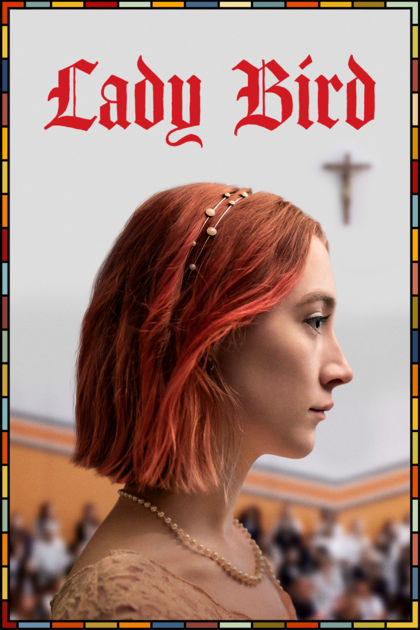
Lady Bird – In the earlier part of 2018, I made an effort to catch most of the films that were nominated for the major categories at the Oscars. I was able to see a good handful in the theater and caught at least one streaming (Get Out). I have some friends that really appreciated Lady Bird, so I wanted try to catch that one while I could. It only had a few limited showtimes the week I saw it, so I figured it was on its way out of the theater. It stuck around for a few more weeks after that. I didn’t know much, if anything, about the film when I sat down to watch, but I can say that I enjoyed it. The film takes place in the 2002-2003 school year, which is the year I graduated high school. I can attest to its accuracy in terms of style, costuming, decor, and overall feel. I went to see the film with a friend that is 6 years younger than me, so I had a great time pointing out all of the fun retro-ish stuff to her.
[The next paragraph will contain some less than detailed discussion of plot points, but some folks may consider it spoilery enough to denote a SPOILER WARNING].
Lady Bird is unlike any other coming of age story that I’ve seen. It’s a story that focuses not just on a young woman growing into her own in adulthood, but of a young woman who comes to appreciate her roots too. Upon first viewing, I wasn’t quite sure to do with the ending. It felt abrupt to me. I didn’t get the resolution that I wanted. I recently watched Lady Bird again. Perhaps it was because I knew what to expect, but I didn’t think it ended so abruptly the second time around. If any of you out there had a similar experience with Lady Bird, I’d love to hear your thoughts.
[/SPOILER WARNING]
I went into this film only knowing of Laurie Metcalf’s work. I love her and could listen to her talk all day. While I came for Laurie Metcalf, I stayed for Saoirse Ronan. This was my first time watching any of her work. Ronan made me laugh, surprised me, frustrated me (her character, not her acting), and brought a smile to my face. She was completely believable in the role, truly selling me on her acting ability. Her performance in Lady Bird has made me want to check out her other work. Greta Gerwig was also not on my radar. Lady Bird is semi-autobiographical for her, which I find intriguing. This is not normally a film I would choose to watch, but I am trying to broaden my horizons. Check this one out if you’re into solid female performances, drama, humor, and coming-of-age stories.
I, Tonya – Everyone I know that saw I, Tonya before I did left the theater raving about it. This is one I wish I had gotten to see more than once in the theater and it is definitely a film I want to own. I feel the need to preface this review by saying the following. I think a common misconception about this film is that it set out to venerate Tonya Harding for what occurred between her and Nancy Kerrigan. That’s simply not the case. In this film, the viewer gets Tonya’s story from multiple perspectives and is left to decide for themselves what to believe. What I enjoyed the most about I, Tonya is that I left the theater having felt the entire gamut of emotional responses I could have to a film. I had laughed, I’d felt fear, I’d felt anger, sadness, confusion, pity, and more. I would have to sit down and think for a long time to recall any other film that has done that to me. There are probably only 5 or fewer films that have made me feel that way. I think the film is worth seeing for that reason alone. However, if you need another one, the cinematography in this film is absolutely killer. The way the camera follows Robbie during her routines really places the audience in Tonya’s skates. I also loved how well the film broke the fourth wall during its storytelling. It created a nice splash of levity, which I enjoyed. The film also used paneled shots, which for me, made me feel like I was reading a comic book about Tonya Harding, but also allowed the viewer to see different characters’ perspectives. It was a good choice for a film like this.
Margot Robbie–I cannot say enough good things about her performance in this film. The best actress competition was quite stiff this year and it is a HARD choice for me to say who I enjoyed more–Sally Hawkins or Margot Robbie. I feel like I can’t choose! (The only film in that category that I did not get to see was The Post, but good grief, it’s Meryl Streep! That’s stiff competition any day of the week). Margot Robbie absolutely steals every single scene in this film. There is a little wink and a nod to Harley Quinn fans in the film as well, so be sure to watch for that. I missed Suicide Squad and as I understand it, she was the only redeeming part about that movie, so I’ll eventually get around to that one, if only to see her performance. The rest of the cast was impressive as well. It’s hard to go wrong with Sebastian Stan, but Allison Janney as Tonya’s mother was so impressive, it will be hard for me to watch her in anything else without thinking of her role in this film.
The biggest lesson for me in I, Tonya was one that is even more relevant today than it was in the early 90s when the events of the film occurred. The media has the ability to lionize or demonize a person with one news report. The responsibility of the media to give the facts without spin is something that cannot be ignored. In the political climate of today, along with the 24-hour news cycle, I, Tonya brings a relevant and important message to all of us–consider all sides, then choose what to believe for yourself.
If you’d like to hear me prattle on about I, Tonya, you should watch the film first then contact me directly so I can give you some more in depth thoughts. I, Tonya and The Shape of Water are my two favorite films of 2017, so I have much to say about both of them. I should also note that I, Tonya did receive the R rating, so there is some brief nudity as well as a truckload of f-bombs and other colorful language. If that sort of thing is offensive or problematic to you, you might want to fast forward or watch via your favorite filtering service.
Those are the two films I saw in the theater in January 2018! I’ll be posting my thoughts on February’s films in the next week or so. As a quick preview, you’ll be getting my thoughts on The Greatest Showman, The Shape of Water, Jumanji: Welcome to the Jungle, Black Panther, and an honorable mention for Get Out, which I streamed via HBO.
If you were to sit down and talk with me about my favorite films, Ridley Scott’s original Alien would make my top five. Heck, it might even be my number one. This list is constantly in flux for me, but that one stays in my top 5 consistently. There are lots of things about this film that keep it in or near the top for me. Here are a few.
I am continually amazed by how much horror is conveyed while the Xenomorph stays in shadow and is never fully revealed until the end.
Ripley is a heroine that is not only strong and powerful with a will to live like no other, she is also compassionate towards her crew. She’s such an interesting character and was quite different from the way most females were portrayed at the time. (I could write you a whole other post about the influence of Star Wars and Princess Leia on this film and Ripley, but I’ll save that for another day).
Alien is rooted firmly in the science fiction and horror genres, bringing forth the best elements of both.
The cinematography is gorgeous. I was fortunate enough to see both Alien and Aliens on the big screen in 2016. If you ever get the opportunity to see it on the big screen, do it. It’s totally worth any effort you make to do so.
The film has influenced other films and television shows I love, notably Stranger Things.
I could go on and on about all the things I love about Alien and the other films of the franchise, but I’ll be saving that for another day. Which day you ask? How about next Thursday, May 3 from 8:30 – 10:30 PM ET with Kat Sas & Curtis Weyant from Kat & Curt’s TV Re-View and Dominic Nardi of NardiViews?
I’ll be joining these fine folks for a discussion on Alien for the next Mythgard Movie Club. Register here to get a reminder e-mail and link about the discussion. Looking forward to seeing you all there!








 The Nerdy Blogger